Polishing Car Paint Without Weakening the Clear Coat
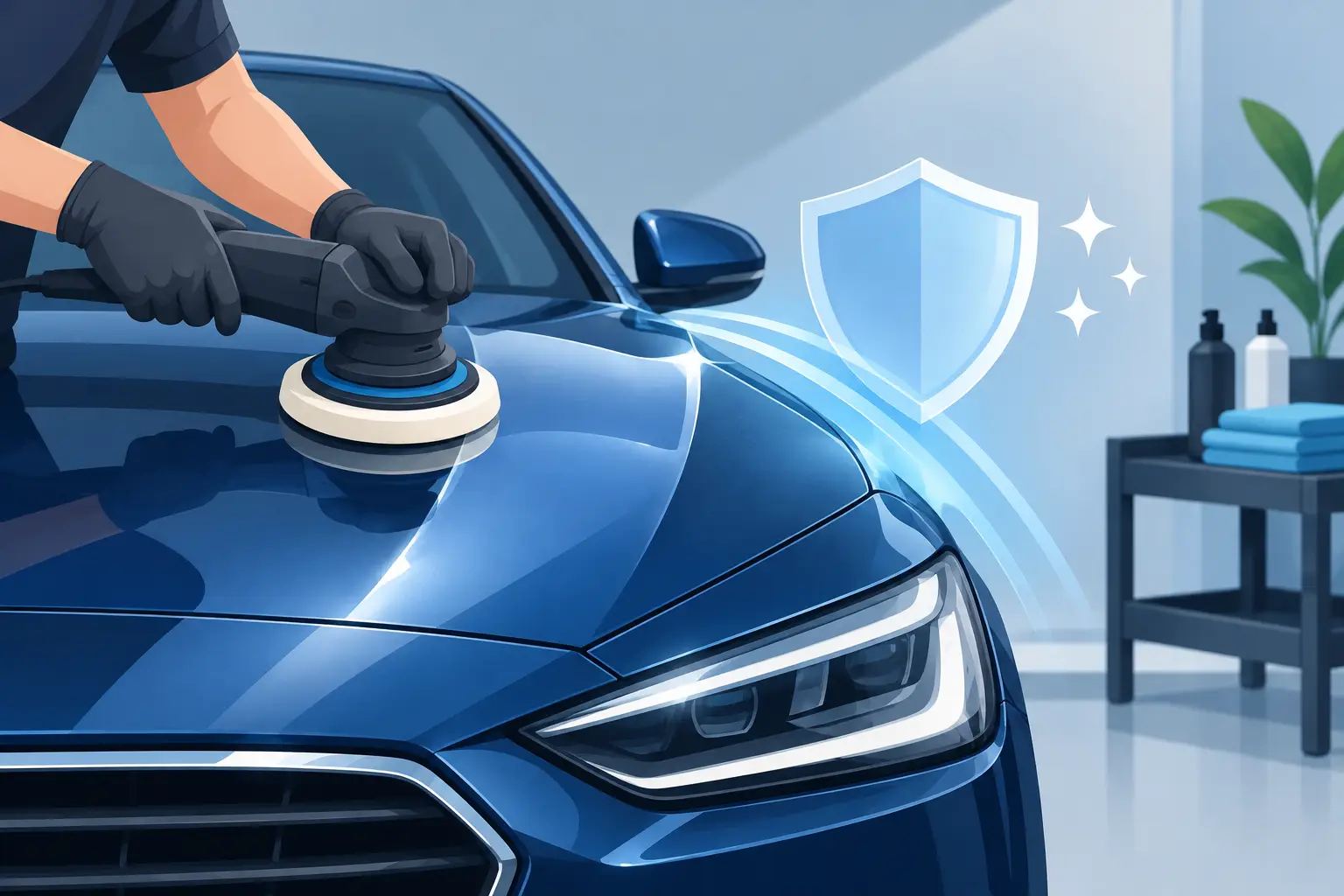
Polishing car paint is more than a cosmetic step before taking photographs or selling a vehicle. When strong sunlight, dust, insect residue and swirl marks from poor washing begin to hide the depth of the colour, polishing can be a considered way to restore surface clarity. A good result, however, depends on understanding what can be corrected safely and what needs a different form of protection, as well as improving gloss.
The outer paint layer, or clear coat, is the protective layer that gives the car its gloss and shields the base colour. Each corrective polishing process removes a very small amount of this layer to level surface defects. Professional polishing can improve the appearance, while excessive polishing or unsuitable tools may weaken the protection you are trying to preserve.
What does car paint polishing actually correct?
Polishing does not fill scratches or add a new layer of paint. It reduces the height of the edges around a surface defect so that light reflects more evenly. This gives the colour greater apparent depth and produces clearer gloss, particularly in sunlight or under bright car-park lighting.
Polishing is generally suitable for light swirl marks, towel or automatic-wash marks, surface dullness, light mineral water spots and oxidation that has not penetrated deeply into the paint. A scratch that clearly catches a fingernail, or damage that has exposed the colour coat or metal, cannot be fully corrected by polishing. Trying to hide it with more aggressive cutting may consume clear coat without resolving the problem and increase later repair costs.
There is a practical difference between polishing and protection. Polishing corrects the surface’s appearance, while waxes and surface protectants add a temporary layer that helps repel water and dirt. Paint protection film provides a higher level of physical protection against light road grit, everyday scratches and exposure on the road. The right choice depends on the car’s condition and use, not just the gloss visible at handover.
When does your car’s paint need polishing?
Inspect the car after washing and drying it thoroughly, preferably in direct light or with an inspection lamp. If the paint still looks dull when clean, or a network of circular marks surrounds reflected light, it will often benefit from a light polish. Polishing may also be appropriate before applying a protective coating or installing paint protection film, since protection preserves the appearance of the surface underneath rather than concealing its defects.
A new car does not always need a full polish. Some cars arrive with minor marks from transport or preparation at the showroom, in which case a localised correction or light finishing polish may be enough. A car exposed to years of harsh washing and sunlight needs a more careful assessment of clear-coat thickness before any multi-stage correction.
Do not make polishing a fixed appointment every few months without a reason. How often it is needed depends on the paint type, washing methods, sun exposure and abrasiveness of the product used. With safe washing and suitable protection, you may need only limited polishing when necessary rather than repeated full correction.
A simple check before deciding
Run your hand over the paint after washing. Noticeable roughness may indicate surface deposits or bonded contamination rather than scratches that need polishing. In that case, begin with safe decontamination and inspect the surface again. If it feels smooth but the reflection is hazy, polishing is more likely to be the appropriate correction.
Steps for polishing car paint safely
A professional result begins before the polishing machine is switched on. Polishing a dirty or contaminated surface drags particles across the paint and creates new scratches, so preparation should not be rushed.
- Wash the car in the shade with the panels cool, using a dedicated car shampoo and a clean wash mitt. Avoid washing-up liquid and household cleaners, which may weaken protective layers and dry out some exterior components.
- Dry the car with a clean, soft microfibre towel, then remove bonded contaminants if necessary. The surface should feel smooth before correction begins.
- Inspect the paint section by section. Start with a small test area, such as part of a door, and use the least aggressive polishing combination capable of improving the defect. This protects the clear coat from unnecessary removal.
- Choose a pad and polishing product suited to the surface condition, and work with overlapping passes and moderate pressure. Excess heat or dwelling too long in one spot can damage the paint, particularly at edges and corners.
- Wipe off residue with a clean towel and inspect the result under different lighting before moving to the next area. Some products temporarily mask marks with glossy oils, so do not rely only on the first impression.
- Once the desired result has been achieved, apply suitable protection. This is where polishing moves from a short-lived visual improvement to care that helps maintain the appearance for longer.
Aggressive polishing on a dark or luxury car is not recommended without practical experience. Dark colours reveal even small mistakes, and some paints are more sensitive to scratching or harder to correct. On cars with thin or repainted finishes, professional measurement and inspection remain safer than relying on a short video or a general recommendation.
Mistakes that make paint look dull again after polishing
The most common mistake is treating polishing as a substitute for correct washing. Returning to rough wash brushes, dirty towels or wiping dry dust off the car will quickly bring swirl marks back, even after excellent polishing. Do not wipe dust from a dry surface. Wash the car or use a safe cleaning method with a dedicated product and a clean cloth.
The second mistake is working in direct sunlight. Hot panels cause polish to dry quickly, reduce control over the result and may leave marks that are difficult to remove. Work in a shaded, well-ventilated area and let the paint cool before starting.
The third mistake is using one product for every situation. A cutting compound may suit certain scratches and noticeable damage, but it is not necessary for light maintenance. A gentle finishing polish may provide a visible improvement while preserving as much clear coat as possible.
How can you maintain the result in a sunny climate?
Sunlight does more than heat the cabin. Over time, it also accelerates wear on exterior surfaces, particularly when heat combines with dirt and contamination. Parking in the shade where possible, promptly washing off bird droppings and insect residue, and drying the car after washing are small steps that reduce the need for intensive correction later.
For owners who want greater protection for the front end, mirrors, loading areas and door edges, paint protection film is a practical option after surface correction. It does not remove the need for care, but it reduces the paint’s exposure to everyday impacts and scratches in vulnerable areas. A more complete approach combines a corrected, protected exterior with heat-control window film that reduces the sun’s effect on passenger comfort and the cabin.
At XEOEX, car protection is built around this combined approach: clean, protected paintwork outside and improved thermal comfort inside through suitable window-film technologies. The right decision is to choose the least intervention that achieves a clear result, then maintain it with protection suited to the way you use your car.
If the paint still reflects light clearly and has only surface contamination, do not rush into polishing. If scratches and dullness have begun to hide the colour’s appearance, a careful assessment, controlled correction and protection afterwards can help preserve the car’s gloss and value without unnecessarily depleting the clear coat.