The Best Ways to Reduce Driving Glare for Safer Visibility
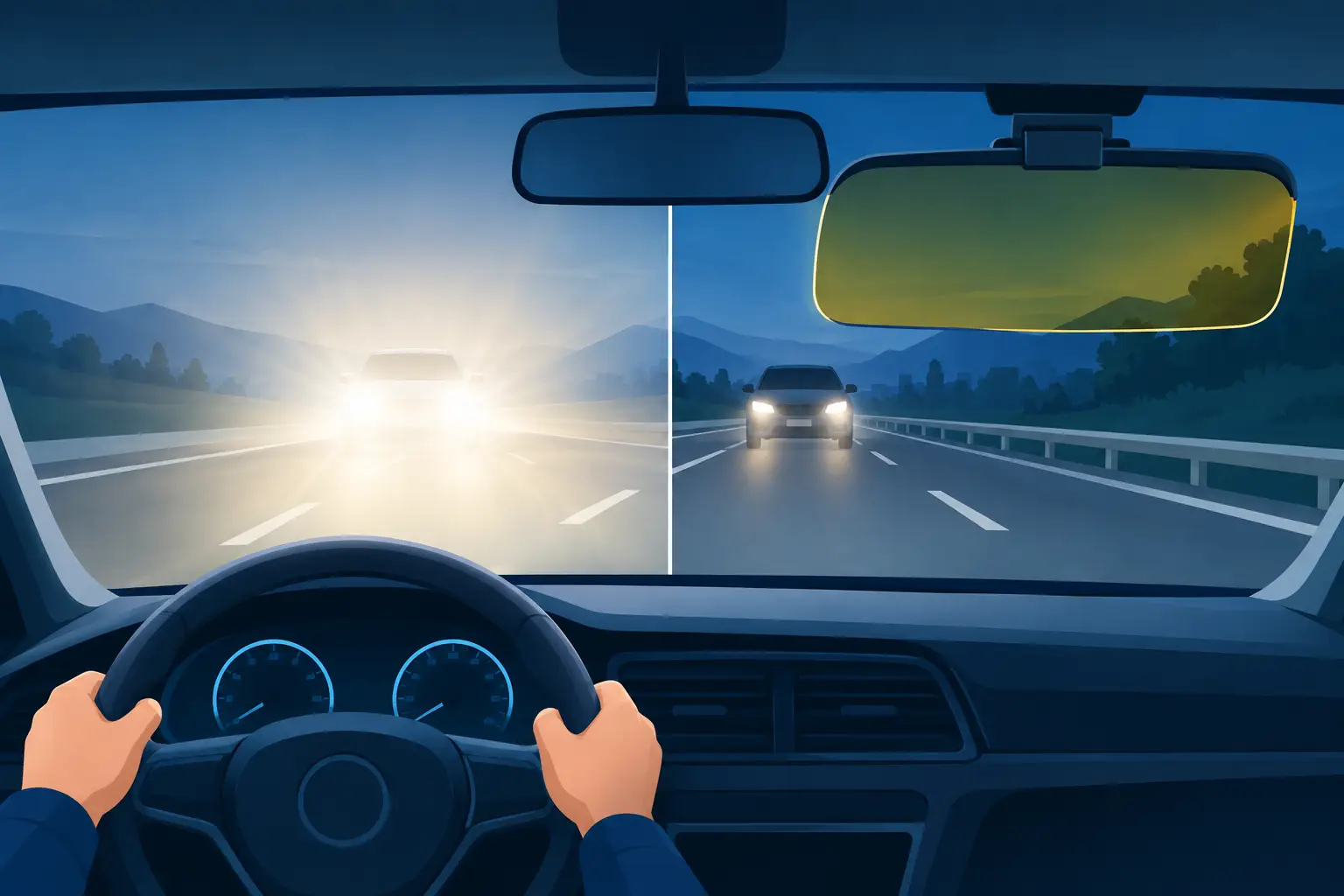
Glare can appear before a driver has time to react: low sun as you leave a motorway, a sudden reflection on the windscreen, or the headlights of a vehicle behind you filling the mirror at night. The best ways to reduce driving glare therefore go beyond making the cabin darker. They combine clear glass, appropriate equipment, and safe, legally compliant control of the light and heat entering the car.
Glare is more than a minor visual annoyance. When your eyes become tired from moving quickly between bright areas and shade, it takes longer to distinguish pedestrians, lane markings, parked vehicles and small details on the road. In sunny, hot regions, managing glare is an essential part of everyday driving comfort and passenger protection.
What actually causes driving glare?
Glare usually falls into two categories. Direct glare includes low sunlight ahead of you in the morning or before sunset, and oncoming headlights at night. Reflected glare occurs when light bounces off a wet road, the bonnet, the dashboard, glass buildings or even a thin greasy layer on the windscreen.
The two can overlap, so one solution will not suit every situation. Sunglasses may help during the day, but they will not eliminate a dashboard reflection on the glass. High-quality window film reduces light and heat entering through the sides and rear, but it does not replace cleaning the glass, maintaining the wipers or keeping a safe following distance at night.
Start with the glass: the solution many drivers overlook
The glass may look clean from outside, while a film on its inner surface becomes noticeable only when you face the sun or vehicle headlights. Fingerprints, cleaning residue, dust and cabin contaminants scatter light instead of allowing it to pass through clearly. The result is a distracting halo around lights and reduced contrast, particularly at night or in rain.
Clean both sides of the windscreen with a dedicated glass cleaner and a clean microfibre cloth, changing to a fresh side of the cloth so you do not spread residue again. Check the wiper blades and washer fluid reservoir too: cracked blades leave fine streaks that catch the light and increase glare. If you find deep scratches, cracks or persistent cloudiness, having the glass inspected and replaced when necessary may be safer than trying to conceal the problem with temporary products.
Do not overlook the dashboard. Glossy surfaces and accessories with reflective faces can appear on the windscreen in sunlight. A matte cover or finish, together with fewer shiny objects near the glass, can make a noticeable improvement without modifying the vehicle.
Sunglasses: helpful when chosen correctly
Good sunglasses reduce daytime eye strain, especially when driving towards the sun. Polarised lenses reduce glare reflected from horizontal surfaces such as roads, water and car bonnets, helping make the road more comfortable to look at in bright conditions.
However, polarisation is not ideal for every driver. Some instrument displays or navigation screens may look dark or change colour when viewed at certain angles through polarised lenses. Before relying on sunglasses for everyday driving, try them inside your car and check that you can clearly see the display, camera views and instrument panel.
Choose lenses intended for daytime use with effective ultraviolet protection, and avoid excessively dark lenses at dusk or when entering tunnels. The aim is to reduce brightness while preserving your ability to see detail, rather than reducing light enough to impair your vision.
Nano ceramic films as a way to reduce driving glare
When glare and solar heat are a recurring part of your journey, window tint film offers a more consistent solution than relying on sunglasses alone. Nano ceramic films are designed to manage solar radiation effectively, helping reject some infrared and ultraviolet radiation while reducing incoming light according to the chosen level of light transmission.
The value goes beyond darkness. A good film can improve cabin comfort and reduce the heat load on the air conditioning while maintaining a professional appearance and appropriate visibility. This matters to drivers who spend a long time in the car, families who want a cooler cabin when they get in, and owners of new cars who want to protect interior materials from the cumulative effects of sunlight.
Even so, a darker film does not always perform better. Visible light transmission determines how much light passes through the glass, while the film’s ability to reject heat and harmful radiation depends on its technology and construction. A nano ceramic film with higher light transmission may offer better night-time visibility and strong heat-control performance compared with a low-quality dark film that restricts vision without dealing effectively with heat.
How do you choose the right film shade?
Start with how you drive. If you make long daytime journeys through open, sunny areas, you may need a careful balance between reducing brightness and maintaining clear vision. If you often drive at night or use rural roads with limited lighting, it is better to avoid dark shades that could make it harder to see vehicles and pedestrians to the sides.
Also consider the different rules governing permitted light transmission through the windscreen, side windows and rear glass. No film should obstruct your field of vision or breach local regulations. A good specialist explains the options that meet your area’s requirements instead of recommending the same shade for every car.
At XEOEX, the choice centres on nano ceramic films that combine heat control with reduced exposure to harmful radiation, while helping customers select a shade that suits everyday use and the need for safe visibility.
Do not overlook mirrors and night-time glare
Driving glare does not end at sunset. Headlights from vehicles behind can be tiring, especially in traffic or on motorways. Start by setting the interior mirror to its night position if your car does not have an automatically dimming mirror. This simple step reduces the intensity of reflected light while retaining a view of vehicles behind you.
Adjust the side mirrors to cover blind spots with as little reflection into the cabin as possible, and keep them clean. If your own headlights are weak or incorrectly aligned, your eyes have to work harder to compensate for poor visibility ahead. Checking their alignment and condition is as important as dealing with light from other vehicles.
Avoid wearing sunglasses at night or using unsuitable films on the windscreen. Excessive light reduction may feel comfortable for a moment, but it reduces your ability to read the road. Safety depends on clear contrast, rather than greater darkness.
Paint care can also help with distracting reflections
Light reflected from the bonnet or dull, damaged areas of paint can be distracting, especially when the sun is low. Regular paint care and suitable protective layers help maintain an even surface and the car’s appearance, although they are not a direct substitute for addressing glare on the glass.
Above all, paint protection helps preserve the car’s value and appearance in an environment where it is continually exposed to sun, heat and dust. Combining heat-control window film, bodywork protection and proper glass care creates a practical approach to driving comfort and long-term vehicle care.
When should you seek a specialist inspection?
If blurred visibility continues after you have cleaned the glass and replaced the wipers, or halos around lights at night become unusually distracting, do not assume the road is the only cause. Scratched glass, a damaged inner layer, incorrectly aligned headlights or a need for an eye examination may be responsible. Addressing the actual cause is more effective than adding a product at random.
Choosing the right solution starts with a simple question: when does glare bother you most—in bright sun, at sunset or behind other vehicles at night? Be precise, then choose what preserves both a clear view of the road and cabin comfort. Better visibility is not a luxury in everyday driving; it is part of an ongoing commitment to safety.