Choosing the Best Paint Protection for the Road
The front of a car is the first area to bear the effects of everyday driving. Flying gravel, coarse dust, insect residue, sand and motorway spray can leave small marks in the paint that are barely noticeable at first, then develop over time into scratches, dullness and a gradual loss of the original finish. Finding the best paint protection for the road is therefore about more than shine: it is about protecting the surfaces most exposed to impacts and abrasion.
If you drive every day in sunny conditions, travel frequently on motorways or own a new car whose value and appearance you want to preserve, choosing suitable protection starts with understanding the damage you want to prevent. Not every product offers the same resistance, and not every part of the car needs the same coverage.
What damages car paint on the road?
Paint does not need a major accident to become damaged. In many cases, deterioration begins with small, repeated abrasions. Front and rear tyres throw fine gravel towards doors and wheel arches, while larger vehicles ahead lift road debris towards the front of your car. Combined with the sun’s heat, these effects become more apparent on dark, glossy surfaces.
Ultraviolet radiation is another factor to consider. It does not directly cause scratches, but it accelerates deterioration of the paint’s outer layer and increases the likelihood of losing depth and shine after prolonged exposure. Unsuitable washing methods or leaving contaminants on the surface can also worsen existing damage.
Effective protection does not mean the car will stay clean or no longer need care. It gives the paint a defensive layer that reduces the impact, friction and contaminants reaching the original surface.
Paint protection film is the strongest option against road damage
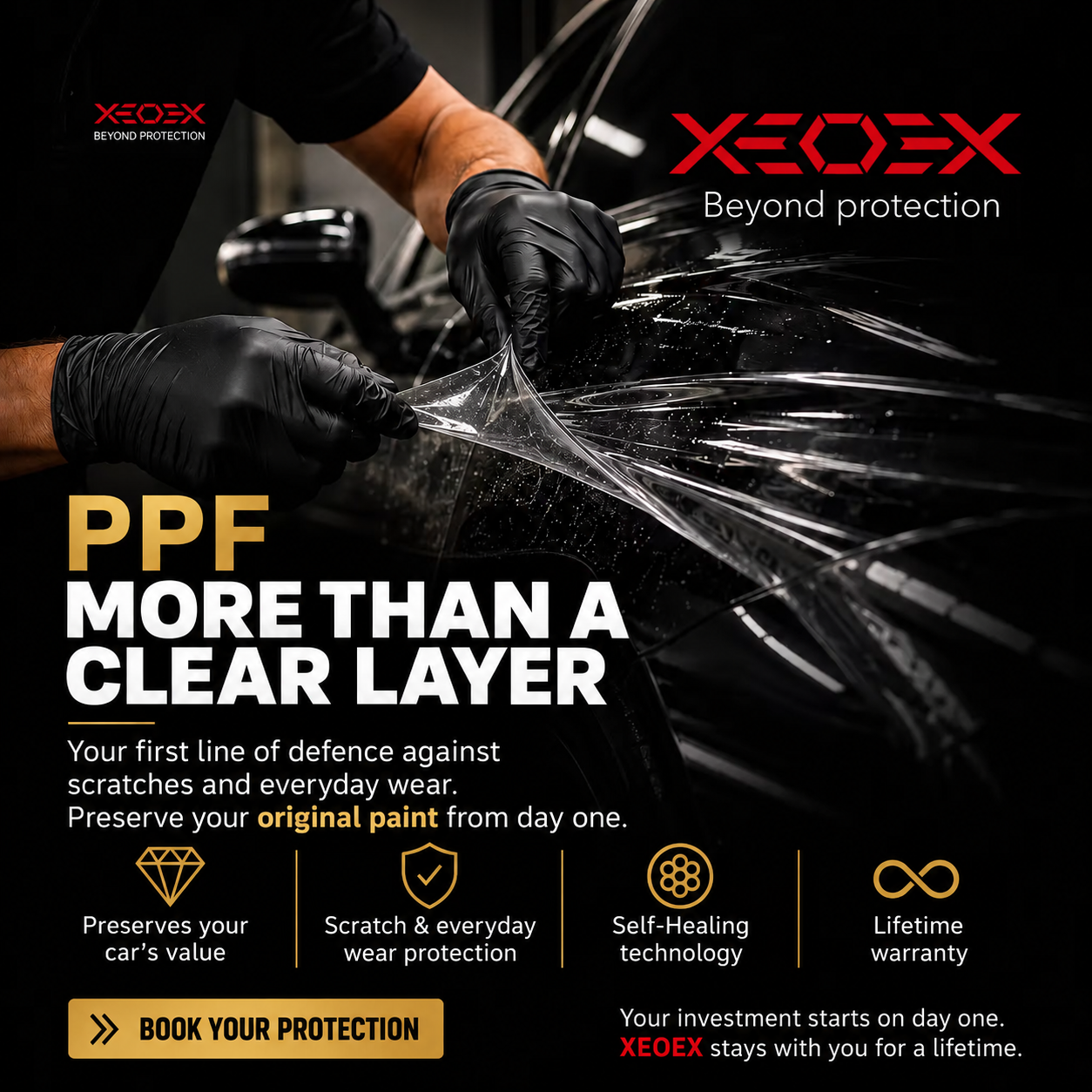
When the main risks are gravel and scratches from the road, paint protection film offers the most capable defence. This transparent film is applied over the paint in areas exposed to impacts, creating a barrier that absorbs some of the effect of particles and abrasion before they reach the original paint layer.
A good film has carefully considered thickness and high clarity, preserving the car’s colour and gloss without a plastic-looking or hazy finish. Some types also offer self-healing properties for light surface scratches when exposed to heat, helping the surface retain a neat appearance through everyday use.
However, “the best” does not always mean covering the entire car. The right choice depends on how you drive, where you drive, your budget and the level of protection you want. A driver who uses motorways every week needs more protection than someone who only makes short city journeys.
Areas to prioritise
If your budget is limited, start with the areas that receive damage first: the front bumper, the leading edge of the bonnet, the front wings, mirror covers and lower door sections. These parts are continually exposed to air carrying gravel and sand.
For new or luxury cars, and for drivers who regularly cover long distances, extended front coverage or full coverage may be a practical decision. It is not only about appearance; it can reduce the need for localised paint repairs that may not perfectly match the original colour later.
Paint protection film or ceramic coating?
Many car owners confuse paint protection film with ceramic coating, although each serves a different purpose. Protection film is primarily designed to resist light impacts, gravel and surface scratches. Ceramic coating focuses more on enhancing surface gloss, reducing the adhesion of dirt, and improving resistance to water and everyday contaminants.
If your question is which protection is best against stone chips from the road, the answer is protection film. If your priorities are easier cleaning, paint shine and reducing the adhesion of dust and water marks, ceramic coating offers useful benefits, but it does not replace the film’s ability to absorb gravel impacts.
The two solutions can be combined in some cases. Protection film is applied to the front and vulnerable areas, with a suitable care layer added over the rest of the bodywork to make cleaning easier and improve appearance. This gives you a physical defence where exposure is greatest and broader surface care for the rest of the car.
How do you choose suitable paint protection film?
Do not base your decision only on price or the phrase “clear protection”. Material quality and installation precision determine the result after months and years of use. Before choosing, review these key points:
- Film clarity: It should preserve the clarity and colour of the paint, particularly on white and dark cars where installation flaws quickly become noticeable.
- Resistance to yellowing: Sun and heat can affect low-quality films, so choose a material designed to resist colour changes during outdoor use.
- Self-healing ability: This feature helps reduce the appearance of fine scratches caused by washing or light contact.
- Adhesive quality: A good adhesive holds the film securely without damaging the original paint when it is removed professionally.
- Installation experience: Even the best film can produce a poor result if it is applied to an unprepared surface, cut imprecisely or left with debris and air underneath.
Installation involves more than sticking film onto a car. The surface needs thorough cleaning, and any obvious defects should be addressed before work begins. The film must then be cut and fitted carefully around edges and curves. A professional finish depends on these details as much as on the quality of the product itself.
When do you need full coverage?
Full coverage is not necessary for everyone, but it suits certain circumstances. If your car is dark-coloured, you drive on motorways with loose gravel, you live in an area with frequent sand and dust, or you plan to keep the car for several years, broader protection becomes a sensible investment.
Full coverage also benefits owners of modern and luxury cars who want to preserve the paint’s condition for resale or trade-in. Original paint in good condition contributes to the impression a car makes and its value, especially when the front is free from accumulated chips and scratches.
Partial protection may be sufficient for a daily car used within the city, provided it includes the front bumper and areas that receive gravel directly. The sensible approach is to allocate your budget according to actual exposure, rather than choosing the largest coverage package simply because it is available.
Road protection does not replace regular care
After protection film is installed, the car still needs regular washing with suitable products and soft tools. Avoid rubbing a dry surface aggressively, and do not leave insect residue, bird droppings or fuel marks in place for long periods. The film protects the paint, but it also deserves care to preserve its clarity and performance.
Check the edges and areas around the bumper and mirrors after long journeys or demanding use. Early signs, such as a small lifting edge or dirt collecting along an edge, are easier to address before they affect the appearance of the installation.
At XEOEX, protection is part of a complete approach to the car: paint protection films reduce the effects of the road, while nano ceramic window films help lower cabin heat and reject harmful radiation. A car whose paint and passenger comfort are cared for does more than look better; it remains better prepared for everyday use in the sun and on the road.
Choose protection according to the roads you actually drive, rather than general promises. If the front of your car faces gravel and heat every day, start there. You will see the value of that decision each time you wash the car and find that the original paint has retained its clarity.